 跳到内容
跳到内容 
1.Definition of Absorbent Gauze and the Significance of Degreasing for Medical Gauze
- 1.1Definition of Absorbent Gauze
Absorbent gauze is a type of medical material made from pure cotton raw material through a series of special processing procedures. It undergoes strict degreasing, bleaching, washing, drying and other processes to remove impurities such as fat, wax and dust in the cotton fiber, forming a soft, clean and breathable gauze material that meets the standards of medical use.
- 1.2Why Medical Gauze Needs Degreasing?
Natural cotton raw material contains a certain amount of fat, wax and other substances. If these substances are not removed, they will have a serious impact on the use effect of medical gauze in the medical field.
Firstly, the fat and wax on the surface of cotton fiber will form a layer of film, which hinders the absorption of liquids by the gauze. In the process of medical treatment, especially in the treatment of wounds, gauze needs to absorb wound exudate in a timely manner. If the gauze cannot absorb the exudate effectively, it will lead to the accumulation of exudate on the wound surface, which is easy to breed bacteria and cause wound infection.
Secondly, the existence of fat and wax will reduce the whiteness of the gauze. In the medical environment, the whiteness of medical materials is an important indicator to judge whether they are clean. The low whiteness of gauze will make medical staff unable to accurately observe the color and state of the wound, affecting the judgment and treatment of the wound condition.
In addition, fat and wax are easy to deteriorate, which will reduce the shelf life of medical gauze and may cause adverse reactions to the wound when used.
- 1.3Benefits of degreasing medical gauze dressings
Higher Whiteness: After degreasing, the impurities such as fat and wax in the cotton fiber are removed, making the gauze show a pure white color. This high whiteness not only meets the hygiene requirements of the medical environment but also allows medical staff to clearly observe the wound through the gauze, facilitating the timely discovery of changes in the wound condition, such as whether there is bleeding, pus and other abnormal situations, and then take corresponding treatment measures.
Better Water Absorption: Degreasing treatment destroys the film formed by fat and wax on the surface of cotton fiber, increasing the number of capillary pores in the gauze. These capillary pores can quickly absorb wound exudate through the action of capillary force.
Promotes Healing: The absorbent gauze can absorb the exudate in a short time, keeping the wound surface dry. A dry wound environment is conducive to the growth and reproduction of epithelial cells, accelerates the healing process of the wound, and reduces the risk of wound infection caused by the accumulation of exudate.


2. Introduction to Conventional Gauze Products and Their Application.
- 2.1 Overview of Conventional Gauze Products
Our conventional gauze products cover a variety of types to meet different medical needs, including gauze swabs, gauze rolls, laparotomy sponges, gauze bandages and gauze balls.
These products are all made of high-quality absorbent gauze, processed in strict accordance with medical standards, and have the characteristics of good softness, strong water absorption and high cleanliness.
- 2.2 Application Scenarios of Various Products
These gauze products are widely used in various medical institutions and related fields, such as hospitals, private clinics and pet clinics. In hospitals, they are essential medical supplies in operating rooms, emergency departments, ward departments and other departments; in private clinics, they are commonly used in the treatment of minor wounds, dressing changes and other daily medical work;
In pet clinics, they are used for the treatment of pet wounds, such as dressing wounds after pet surgery or treating trauma caused by accidents.
- 2.3 In-depth Introduction to the Medical Scenario Use and Benefits of Our Products.
2.3.1 Gauze swabs


Medical Scenario Use: Gauze swabs are widely used in wound cleaning, surgical site preparation, and oral mucosa care. In outpatient clinics, they are the first choice for handling minor cuts, abrasions, or lacerations.
During dental procedures like tooth extractions, they help absorb saliva and blood to keep the oral cavity dry. In operating rooms, they are used to apply antiseptics to the skin around surgical incisions and wipe away excess solution to avoid skin irritation.
Usage Instructions: Select a sterile gauze swab of appropriate thickness (8-ply for small wounds, 12-ply or 16ply for more exudate) based on the wound size and condition.
For wound cleaning: Soak the gauze swab in normal saline or antiseptic (e.g., povidone-iodine), gently wipe the wound surface from the center to the edge to remove dirt and debris.
For protect the wound from secondary injury: After cleaning, use a dry gauze swab to cover the wound gently, then place it directly on the wound and secure it with medical tape.
For oral care: Use a small-sized dry gauze swab to gently wipe the oral mucosa or apply pressure to the extraction site (ask the patient to bite down lightly if stopping bleeding).
Benefits: Gauze swabs have high sterility, which effectively prevents wound infection when in contact with open wounds. They are soft and non-abrasive, reducing discomfort when wiping sensitive skins. Additionally, their absorption capacity ensures they can handle different levels of wound exudate without wasting materials.
2.3.2 Gauze Rolls
Medical Scenario Use: Gauze rolls are mainly used for dressing large-area wounds (such as burns or extensive abrasions) and securing post-surgical dressings on movable parts (like elbows or knees). In vascular clinics, they also serve as a base layer under compression bandages for patients with venous insufficiency to reduce skin irritation.
Usage Instructions: Wrap the roll around the target area in a spiral or overlapping (50% coverage) manner, maintaining even tension.
For large wounds: First place a sterile gauze swabs on the wound, then wrap the roll over it to hold the pad in place.
After wrapping, secure the end with tape or a safety pin (avoiding direct contact with the wound) and check for proper blood circulation (e.g., no numbness or discoloration in fingers/toes).
Benefits: Gauze rolls are highly breathable, enabling air circulation to keep the wound area dry and reduce the risk of skin maceration. Moreover, their continuous length can be cut freely, making them suitable for different wound sizes and reducing material waste.
2.3.3 Laparotomy Sponges (lap sponges)
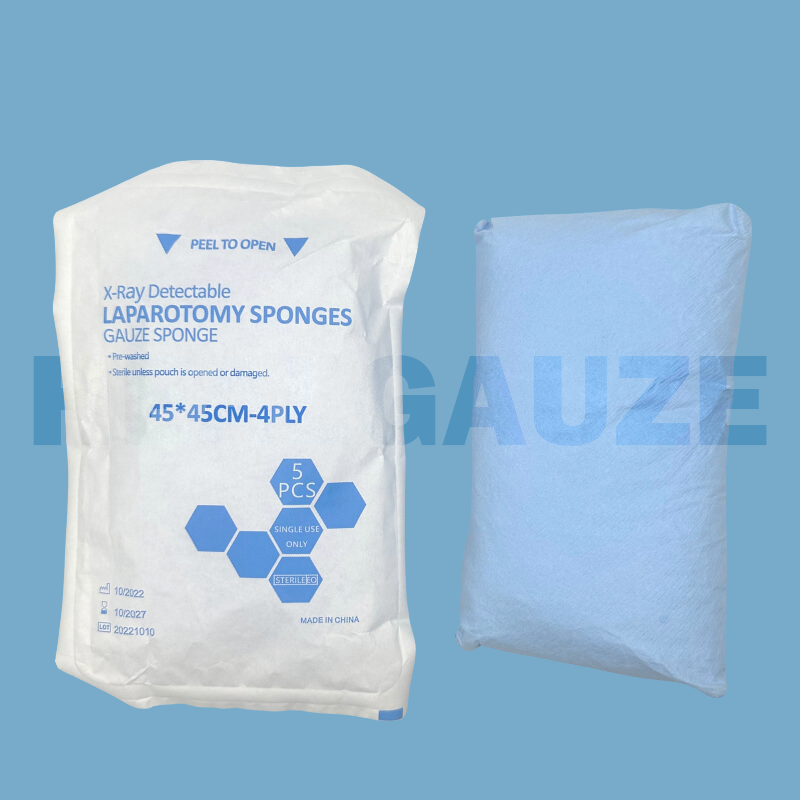
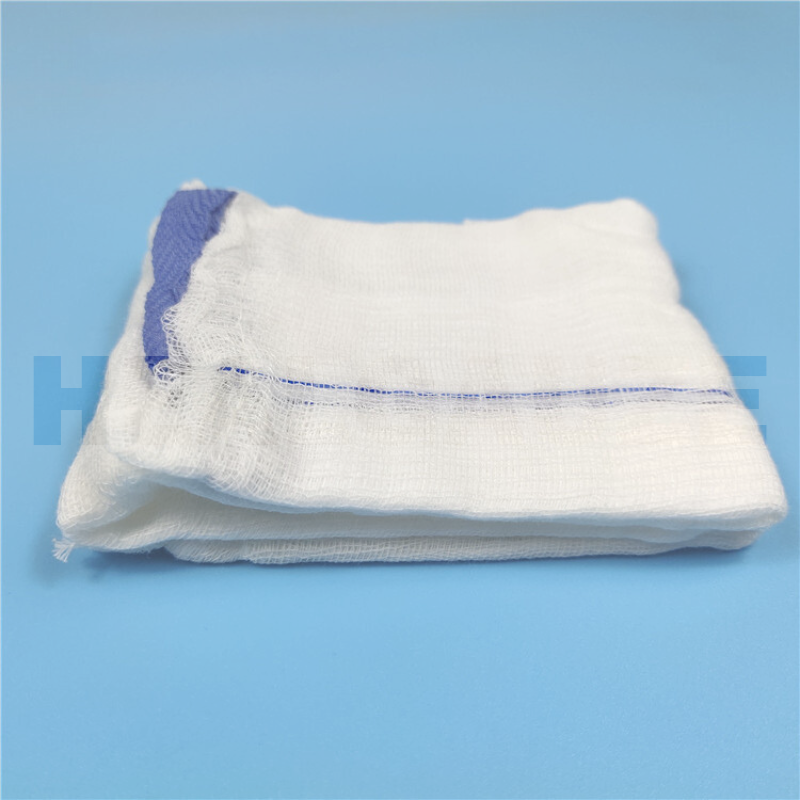
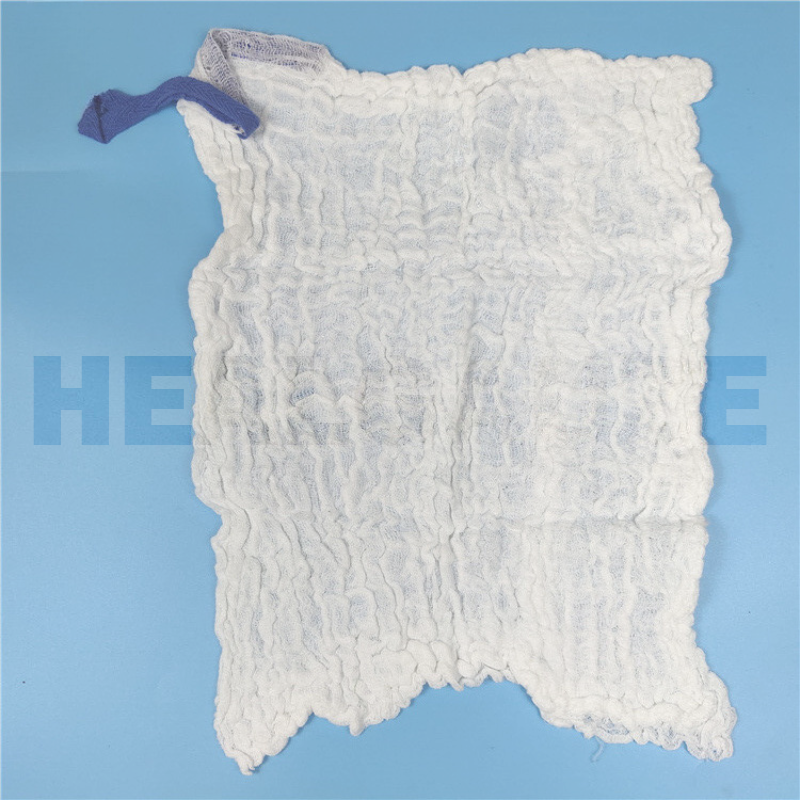
Medical Scenario Use: Laparotomy sponges are essential in abdominal surgeries (e.g., cesarean sections, laparotomies) to absorb blood and peritoneal fluid, improving surgical field visibility. They are also used for dressing large post-surgical incisions (like open abdominal incisions) and managing high-exudate chronic wounds (e.g., stage 3-4 pressure ulcers).
Usage Instructions: Before use, confirm the presence of the radiopaque strip (to prevent accidental retention in the body) and check for package integrity (ensure sterility).
During surgery: Use sterile forceps to place the sponge in the abdominal cavity or on the surgical site to absorb fluid; count the number of sponges before and after use to avoid loss.
For post-surgical dressing: Place the sponge directly over the closed incision, ensuring full coverage of the wound area, then secure it with a surgical binder or adhesive tape.
Benefits: Laparotomy sponges have strong absorption capacity, capable of absorbing 10-15 times their weight in fluid, which effectively keeps the wound surface dry. The built-in radiopaque strip provides a critical safety guarantee, allowing easy detection via X-ray if accidentally left in the body. They are also thick and durable, maintaining their structure even when saturated to avoid fiber shedding into the wound.
2.3.4 Gauze Bandages
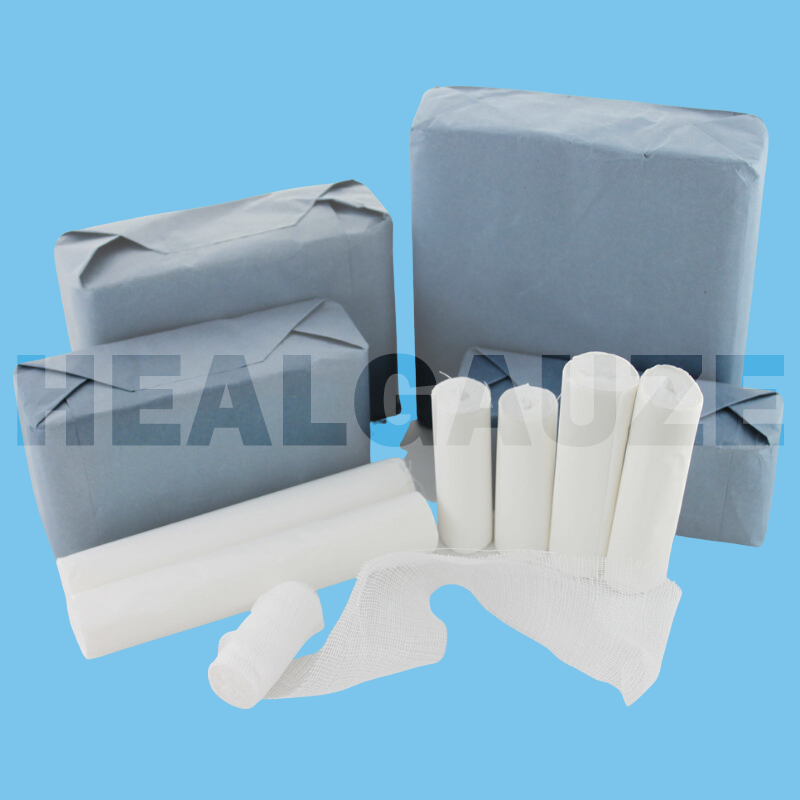
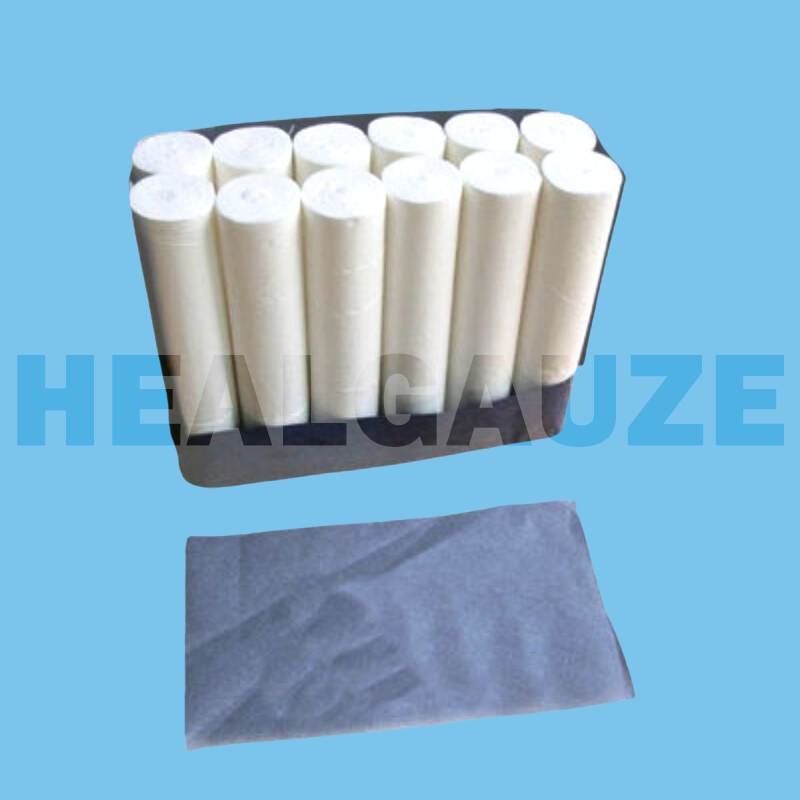
Medical Scenario Use: Gauze bandages are widely used in the fixation of wounds and the pressure bandaging of limbs. In the emergency treatment of fractures, after the fracture site is reset, medical staff will use gauze bandages to wrap the splint around the fracture site to fix the splint, prevent the displacement of the fracture end, and ensure the stability of the fracture healing environment.
In addition, in the treatment of sprains and strains, gauze bandages can be used for pressure bandaging to reduce local swelling. For example, when a patient has an ankle sprain, after cold compress treatment, medical staff will wrap the ankle with a gauze bandage with appropriate tension to limit the movement of the ankle joint, reduce the exudation of tissue fluid, and alleviate the swelling of the ankle.
Usage Instructions:
Fractures: Alternate wrapping splint and limb; avoid tightness.
Sprains: Slightly tighter on joints, looser on surrounding areas.
Benefits: The gauze bandage is breathable, which can allow the skin under the bandage to breathe normally, reduce the stuffiness of the local skin, and prevent the occurrence of skin allergies and other adverse reactions. In addition, the gauze bandage is easy to use and can be cut into different lengths according to the needs, which is convenient for medical staff to operate.
2.3.5 Gauze Balls

Medical Scenario Use: Gauze balls are widely used in ophthalmic care (e.g., cleaning eye discharge from conjunctivitis), ENT treatments (e.g., stopping nosebleeds), and dental procedures (e.g., controlling bleeding after tooth extractions). They are also used for precise cleaning of small surgical sites (e.g., mole removal incisions) in dermatology clinics.
Usage Instructions: Select a gauze ball of appropriate size (1-2 cm for eyes/nose, 3-5 cm for dental use) and ensure it is sterile.
For nosebleeds: Gently insert a sterile gauze ball into the bleeding nasal cavity, ask the patient to tilt their head forward slightly, and apply gentle external pressure to the nose for 5-10 minutes.
For dental bleeding: Place the ball on the extraction socket, instruct the patient to bite down gently and hold for 20-30 minutes to promote clot formation.
For eye care: Moisten the ball with normal saline, gently wipe the eye from the inner canthus to the outer canthus to remove discharge, using a new ball for each eye to avoid cross-infection.
Benefits: Gauze balls have a small, spherical shape that allows precise operation on narrow or delicate areas (e.g., nasal cavity, around the eyes) where larger gauze products are inconvenient to use. They are soft and gentle, minimizing irritation to sensitive tissues like the ocular surface or nasal mucosa. Additionally, they are single-use, which eliminates the risk of cross-contamination and ensures hygiene during medical procedures.
3. Summary
These high-quality absorbent gauze products provide a strong guarantee for the smooth progress of medical work and the rapid recovery of patients’ wounds. In the future, we will continue to optimize the production process of absorbent gauze products, improve product quality and performance, and provide more high-quality medical materials for the medical industry to contribute to the cause of human health.


